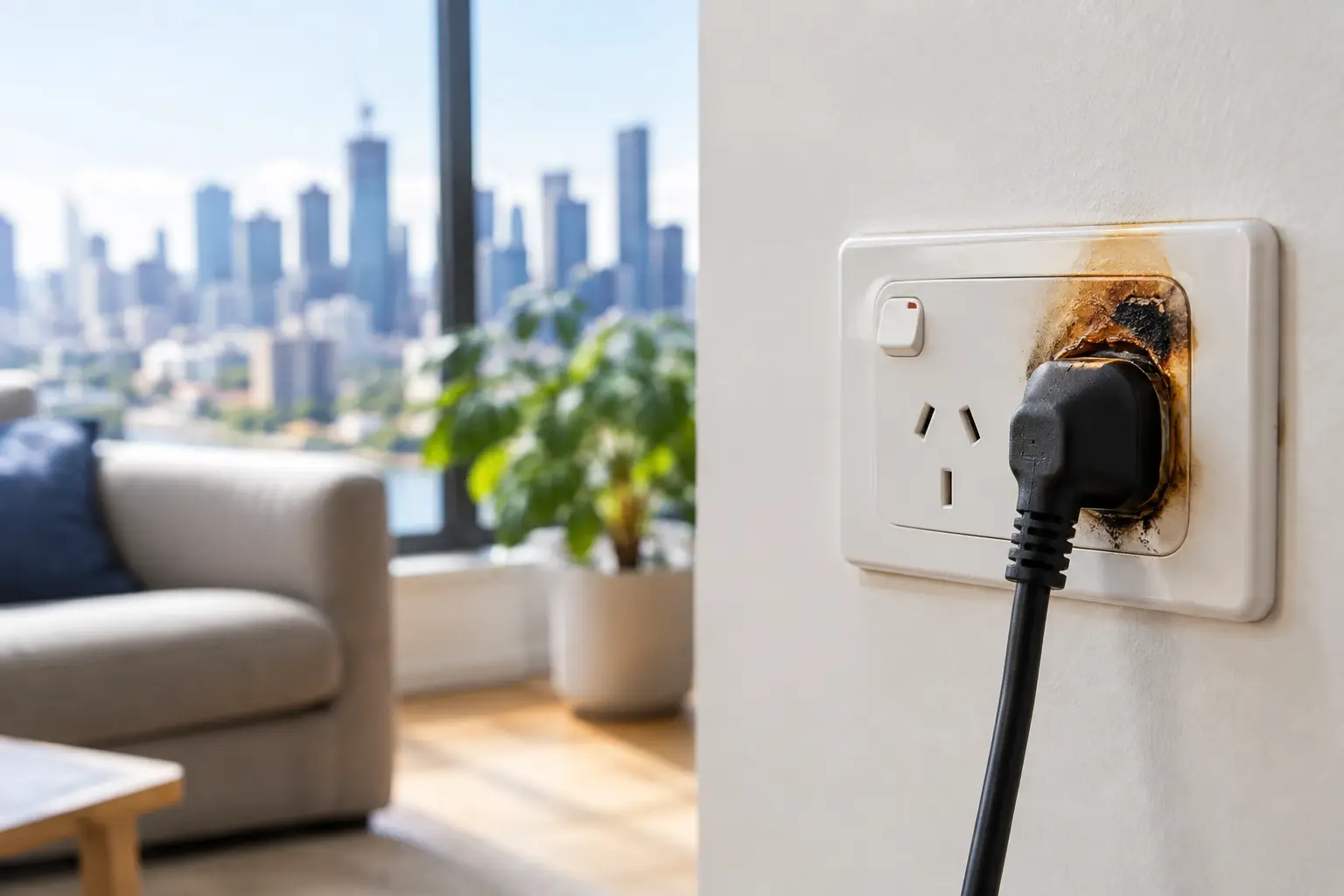
A power point that feels warm after a phone charger has been plugged in briefly is worth checking. A power point that is hot, smells burnt, crackles, discolours the wall plate or trips the circuit breaker needs prompt attention. Understanding why power points overheat helps property owners and facility managers act before a minor fault becomes equipment damage, electrical shock or fire.
Power points are designed to carry a specified electrical load safely. When heat develops at the outlet, it usually means electricity is meeting resistance where it should not, or the circuit is being asked to do more than it was designed to handle. The cause is not always visible from the front of the wall plate, which is why overheating should be assessed by a licensed electrician rather than ignored or repaired as a DIY job.
Why power points overheat
Electricity moving through a sound electrical connection produces very little heat. A loose, worn or damaged connection creates resistance, and resistance creates heat. As the connection heats up, the surrounding materials can deteriorate further, making the fault progressively worse.
In homes, this often occurs at older outlets that have had years of plugs inserted and removed. In commercial and industrial settings, frequent equipment changes, vibration, higher operating loads and repeated use can accelerate wear. The same warning signs apply across all sites, but the consequences can be more significant where a failed outlet interrupts critical equipment or operations.
Loose terminals and poor connections
Loose wiring terminals behind a power point are one of the most common causes of overheating. This can result from normal movement over time, ageing components, poor original workmanship or damage during previous work. The plug may still appear to work normally, but the connection behind the wall can heat under load.
A loose connection may produce a faint buzzing sound, intermittent power or a burning smell. Sometimes the wall plate becomes warm only when a particular appliance is running. Do not assume the appliance is at fault without testing. The issue may be at the outlet, the plug, the cable or elsewhere on the circuit.
Overloaded outlets, power boards and circuits
An outlet can be overloaded when too many high-demand appliances are supplied from the same point or circuit. Portable heaters, kettles, air fryers, dryers, washing machines, dishwashers, workshop tools and commercial equipment can draw substantial current. Using several of these from one power board, double adaptor or nearby group of outlets can create excessive heat.
Power boards are often blamed, and sometimes rightly so. A low-quality, damaged or overloaded power board can overheat internally or transfer heat to its plug and the wall outlet. However, replacing a power board does not solve an underlying circuit or outlet fault.
The load also matters over time. An outlet that copes with occasional use may not be suitable for equipment operating for long periods, such as server equipment, refrigeration, production machinery or charging stations. A proper assessment considers the appliance rating, how long it runs and what else is connected to that circuit.
Worn outlets and damaged plugs
The internal contacts of a power point are designed to grip the pins of a plug firmly. With age and repeated use, those contacts can loosen. A plug that feels loose, droops, needs to be held in position or slips out easily may not be making a reliable connection. That poor contact can create arcing and heat at the plug pins.
Inspect plugs and leads without touching exposed metal. Scorch marks, melted plastic, bent pins or a darkened plug face are warning signs. A damaged appliance plug can overheat a perfectly serviceable outlet, while a damaged outlet can harm multiple plugs. Both need to be checked.
Faulty appliances and extension leads
Some overheating problems begin with the appliance rather than the fixed wiring. Internal faults, damaged flexible leads or unsuitable extension leads can raise current draw or create a poor connection. Long leads that are tightly coiled while powering high-load equipment can also retain heat.
This is especially relevant on worksites, in warehouses and in older homes where extension leads may be used as a permanent solution. Extension leads are for temporary use, not a replacement for properly located fixed power points. If equipment must routinely be powered from an extension lead, additional outlets or a dedicated circuit may be the safer long-term option.
Ageing wiring and unsuitable circuit design
Older properties may have wiring, switchboards or outlet circuits that were not designed for modern electrical demand. A home once supplied with a small number of general-purpose outlets may now support entertainment systems, home offices, kitchen appliances, heating and multiple chargers. Commercial tenancies often change use without corresponding electrical upgrades.
Age alone does not prove an installation is unsafe, but it does justify a closer look when overheating occurs. An electrician can test the circuit, inspect terminations, identify load issues and determine whether repairs, new circuits or switchboard work are required.
Warning signs an overheating power point needs urgent action
A power point should not be hot to touch. Mild warmth can occur with some equipment, particularly chargers and high-load appliances, but heat at the wall outlet itself is not something to normalise. Act quickly if you notice a burnt smell, crackling or buzzing, brown marks, melted plastic, a loose plug, sparks, repeated tripping, or power cutting in and out.
If it is safe to do so, switch off the appliance and stop using that outlet. If there is smoke, visible sparking or signs of fire, isolate power at the switchboard only if this can be done safely, leave the area and contact emergency services. Do not spray water on an electrical fire.
For less immediate but clear warning signs, take these practical steps:
- Unplug the appliance by gripping the plug, not pulling the lead, if the plug is cool enough to handle safely.
- Do not use the affected power point again until it has been inspected.
- Avoid double adaptors and do not shift the same load to another overloaded power board.
- Arrange a licensed electrician to inspect the outlet, appliance connection and relevant circuit.
Do not remove the wall plate, tighten terminals or attempt to replace a fixed power point yourself. In Victoria, fixed electrical work must be completed by appropriately licensed electricians, with the required testing and certification where applicable.
How electricians find the real cause
A proper investigation goes beyond replacing a marked outlet. An electrician will usually inspect the power point and plug condition, test the circuit, check connections, assess the load and look for signs of heat damage in the wiring or switchboard. Thermal testing may be useful in commercial and industrial environments, where heat can reveal developing faults before a failure occurs.
The remedy depends on the cause. A damaged outlet may need replacement, while loose wiring may require repairs at the outlet and other points on the circuit. If the circuit is overloaded, the solution may involve redistributing loads, installing additional outlets, providing a dedicated circuit or upgrading electrical infrastructure. For businesses, planned work outside operating hours may reduce disruption, but urgent hazards should never wait for convenience.
Preventing power point overheating
Prevention starts with using outlets as intended. Plug high-demand appliances directly into a suitable wall outlet where possible, and use quality, correctly rated power boards only for appropriate loads. Keep leads and plugs in good condition, replace damaged accessories promptly and avoid running cables under rugs, through doorways or where they can be crushed.
For property owners planning renovations, kitchen upgrades, home offices or EV charging, electrical capacity should be considered early. The cheapest option is not always the most practical once appliance use increases. In workplaces and industrial sites, maintenance programs should include outlets, leads, portable equipment and load changes, particularly in high-use areas.
A warm power point is not a maintenance issue to place on next month's list. Removing the load and arranging a professional inspection early is the sensible way to protect people, property and continuity of supply. For Melbourne properties with recurring outlet faults or changing electrical demands, iElectrify can assess the installation and provide a compliant path forward.