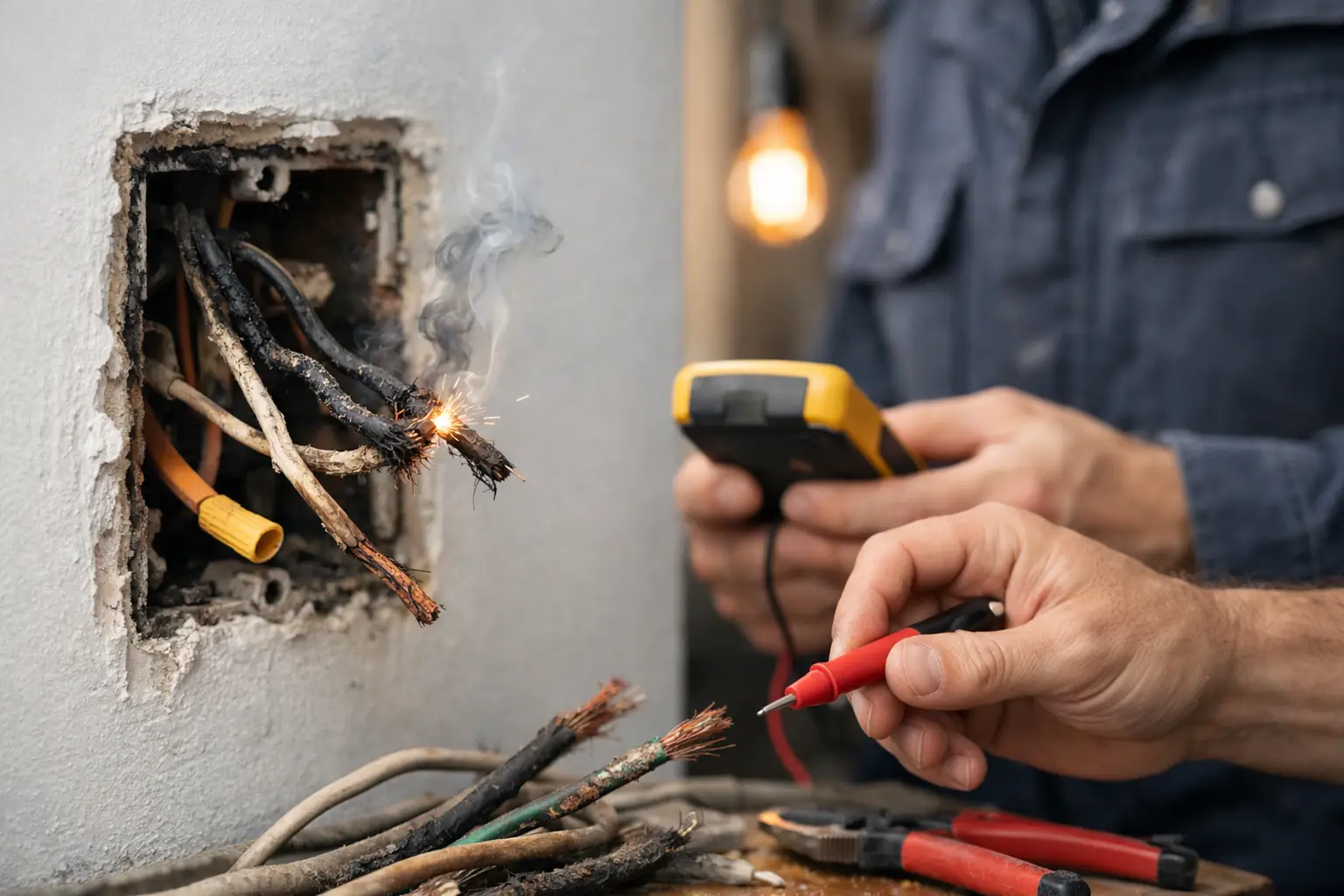
A power point that feels warm, lights that flicker when equipment starts, or a circuit that trips without an obvious reason can be easy to dismiss as a minor inconvenience. They can also be among the top signs wiring needs replacement. In a Melbourne property, ageing or unsuitable wiring can affect safety, reliability and the ability to run the appliances, equipment and technology a site now depends on.
Electrical wiring is largely hidden behind walls, ceilings and switchboards, so its condition is not always obvious. A professional assessment is the right way to determine whether a fault can be repaired locally or whether partial or full rewiring is warranted. What matters is responding early, rather than waiting for a small warning sign to become an outage, damaged equipment or fire risk.
Why wiring condition matters
A wiring system is designed around the demands, standards and materials of its era. Many older homes and commercial buildings were not built for multiple air conditioners, induction cooktops, EV chargers, large screen displays, extensive data equipment or modern production machinery. Even a property that appears to work normally may have circuits that are overloaded, poorly altered or no longer suitable for present use.
The answer is not always a full replacement. In some buildings, a targeted repair, additional circuit or switchboard upgrade may be the most sensible outcome. In others, particularly where original wiring is deteriorating or the property has had numerous uncoordinated alterations, replacement offers the safer long-term solution. A licensed electrician can assess the installation as a complete system rather than treating each symptom in isolation.
Top signs wiring needs replacement
Frequent tripping, blown fuses or loss of power
Circuit breakers and safety switches are designed to operate when they detect a problem. An occasional trip can result from a faulty appliance or a temporary overload. Repeated tripping, however, should not be solved by continually resetting the switch.
If a circuit trips when the same equipment is used, when appliances run together, or without an apparent trigger, the issue could involve damaged cable insulation, an overloaded circuit, moisture ingress, a faulty outlet or a connection problem. Older properties with rewireable fuses need particular attention, as the protection arrangement may be outdated or incorrectly sized.
For commercial and industrial sites, recurring trips can interrupt refrigeration, point-of-sale systems, IT equipment, machinery or safety-critical operations. Identifying the cause promptly helps protect both the electrical installation and business continuity.
Flickering or dimming lights
A single flickering light may have a loose globe or a failing fitting. Flickering across several areas, lights that dim when a major appliance starts, or brightness that changes unpredictably can point to a circuit or connection issue.
Voltage fluctuations can be associated with loose terminals, overloaded wiring or a supply fault. If lights brighten noticeably as well as dim, turn off sensitive equipment where practical and arrange an urgent electrical inspection. Unstable voltage can damage appliances and electronic controls.
Warm, discoloured or damaged outlets and switches
Power points, switches and plugs should not be hot to touch during ordinary use. Heat, browning, yellowing, cracking, scorch marks or a melting-plastic smell can indicate a loose connection, overloaded outlet or component failure. These are not cosmetic issues.
Avoid using the outlet until it has been checked. Do not cover the area, attempt a repair yourself or rely on a power board as a workaround. A licensed electrician can inspect the outlet, the connections behind it and the circuit supplying it to determine whether the damage is local or part of a wider wiring concern.
Buzzing, crackling or sparking
Electrical systems should operate quietly. A faint hum from some equipment may be normal, but buzzing from a switchboard, crackling at a power point, or visible sparking when plugs are inserted needs attention.
Sparking can occur if a plug is loose or equipment is faulty, yet it may also indicate worn outlets or compromised connections. If you notice smoke, burning smells, severe arcing or signs of fire, keep clear of the affected area, call emergency services if required, and only isolate power if it can be done safely.
Old cable types or visible deterioration
Some older Melbourne buildings may contain wiring materials that have degraded over time or no longer meet current expectations for a modern installation. Brittle insulation, fabric-covered cabling, exposed conductors, deteriorated conduits or cables damaged by pests are clear reasons for assessment.
Visible cabling in garages, roof spaces, plant rooms and underfloor areas can provide clues, but wiring should not be handled or disturbed by unqualified people. The condition of cable inside walls may be different from what is visible at one point, which is why testing and inspection are essential.
Too few outlets and heavy reliance on power boards
A shortage of power points is not automatically evidence that wiring has failed, but it often indicates that the electrical design no longer suits the property. Daisy-chaining power boards, running extension leads under rugs, or loading one outlet with several high-demand appliances creates avoidable risk.
For a home, the better solution may be new dedicated circuits and additional outlets in kitchens, studies, living areas or garages. In offices, retail spaces and workshops, it may require a planned upgrade that considers workstations, equipment loads, access requirements and future growth. Replacement wiring can be considered when the existing circuits cannot safely support these changes.
Electrical shocks or tingles
A shock or tingle from an appliance, tap, metal fitting or switch must be treated seriously. Stop using the item or area and arrange urgent investigation. The cause might be a faulty appliance, damaged wiring, poor earthing or another fault within the installation.
Do not assume a mild tingle is harmless because it only happens occasionally. Conditions can change with moisture, equipment use and contact with conductive surfaces. This is particularly relevant in kitchens, bathrooms, laundries, outdoor areas, commercial wet areas and industrial environments.
Renovations, extensions and repeated patchwork work
Renovations are a practical time to review existing wiring. Opening walls and ceilings can expose aged cables, non-compliant alterations or circuits that were never intended to serve the new layout. Adding a room, upgrading a kitchen, converting a garage or installing high-load equipment may place new demand on an old system.
The same applies to buildings that have changed use over time. A former residence converted into consulting rooms, a retail tenancy adapted for food service, or a warehouse fitted with new machinery may need more than a few added outlets. A properly scoped electrical upgrade can ensure circuits, protection and cable capacity match the way the site operates now.
When replacement is more likely than repair
A local fault does not mean every cable must be replaced. Replacement becomes more likely when there is widespread insulation deterioration, repeated faults on different circuits, undersized wiring, obsolete or damaged components, or a history of additions that have left the system difficult to verify and maintain.
Age alone is not the deciding factor. Some older installations have been well maintained and upgraded appropriately, while newer installations can develop serious problems due to poor workmanship, water damage or excessive loading. The key question is whether the installation is safe, compliant, testable and suitable for its intended load.
For facilities managers and commercial operators, planned replacement can also be preferable to reactive repairs. Scheduling work around trading hours, production windows or tenant access reduces disruption and allows the project to be documented properly. It also gives the business an opportunity to allow for future circuits, lighting changes, communications equipment or planned expansion.
What a professional electrical assessment involves
A licensed electrician will start by discussing the symptoms, age and use of the property. They may inspect the switchboard, test safety switches, assess circuit loading, check accessible wiring and outlets, and identify signs of overheating or poor connections. Testing helps separate an appliance fault from an issue within the fixed wiring.
From there, the recommendation should reflect the actual condition of the site. It may involve replacing a damaged circuit, upgrading a switchboard, installing new dedicated circuits, rectifying unsafe alterations or planning a staged rewire. For larger commercial and industrial work, clear staging and coordination are important to maintain safe access and minimise downtime.
In Victoria, fixed electrical work must be completed by appropriately licensed electrical professionals. This is not a DIY task, even where the issue appears minor. Proper testing, certification where required and clear records give property owners and operators confidence that the work has been completed correctly.
If something in your electrical system does not feel right, treat it as useful information rather than an inconvenience to work around. An early inspection can provide a clear path forward, whether that is a straightforward repair or a planned wiring upgrade that keeps your property safe and ready for the demands placed on it.