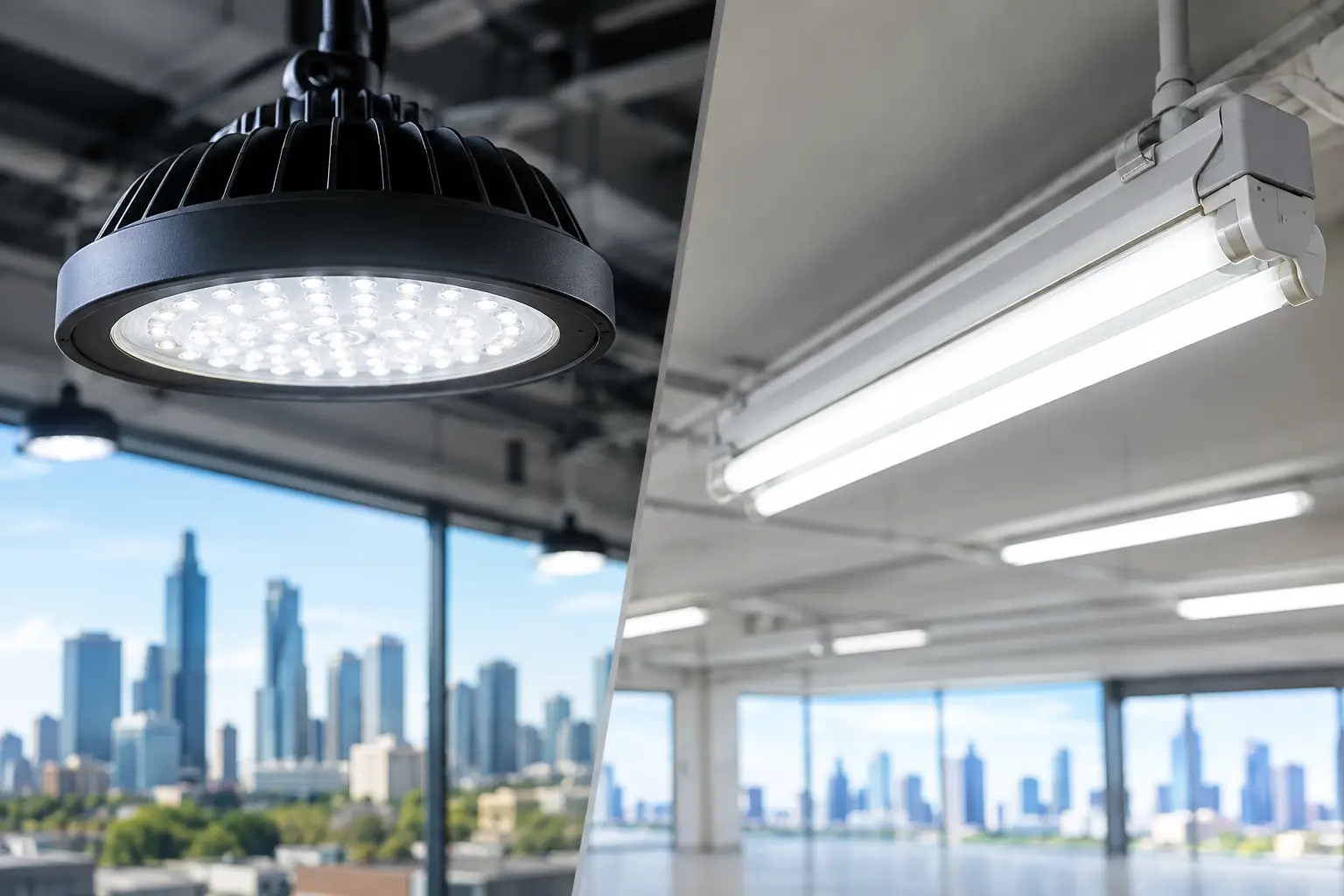
A flickering fluorescent fitting in a warehouse aisle or kitchen is more than an annoyance. It can affect visibility, staff comfort and day-to-day maintenance costs. When comparing LED lighting vs fluorescent, the right choice depends on the space, operating hours, existing fittings and the quality of the proposed upgrade - not simply the purchase price of a lamp.
For most Melbourne homes, offices, retail spaces and industrial facilities, LED is now the practical long-term option. It uses less electricity, lasts longer and gives far greater control over light output and colour temperature. However, a worthwhile changeover needs proper assessment, particularly where older fluorescent fittings, emergency lighting or large-scale controls are involved.
Why LED has become the standard choice
Fluorescent lighting was once a sensible solution for broad, efficient lighting. It remains common in older commercial buildings, workshops, schools, car parks and industrial sites because it provides a wide spread of light at a relatively low upfront cost.
LED technology has moved well beyond the early retrofit products that delivered harsh light or inconsistent performance. Quality LED fittings can now provide even illumination, reliable colour rendering and a service life that substantially reduces relamping work. For sites that run lights for long shifts, six days a week or around the clock, those differences add up quickly.
The comparison is not just about watts. A well-planned LED installation can improve task visibility, reduce dark areas, lower heat output and make it easier to control lighting by zone, sensor or timer. That can support both operating costs and safer use of the space.
LED lighting vs fluorescent: the practical differences
Energy use and running costs
LEDs generally use significantly less power than fluorescent systems delivering a comparable level of useful light. The exact saving depends on the fitting type, ballast losses, hours of operation and whether the existing layout is over-lighting or under-lighting an area.
A small residential upgrade may deliver modest dollar savings each quarter, but it also reduces the need to replace globes. In a commercial premises with dozens or hundreds of fittings, lower wattage can have a more noticeable effect on electricity consumption. Warehouses, factories, common areas and retail floors are often strong candidates because lights may operate for extended periods.
When assessing costs, compare the whole system rather than just the lamp. An old fluorescent fitting may include a ballast that consumes energy and eventually requires replacement. A quality LED fitting with an appropriate driver can remove that ongoing point of maintenance.
Lifespan and maintenance
Fluorescent tubes and starters can require regular replacement, particularly in areas subject to frequent switching, vibration, heat or cold. As fittings age, ballasts can fail and tubes may flicker, buzz or take time to reach full brightness.
LED fittings typically have a longer rated service life, although the quality of the driver, heat management and installation all matter. A cheap fitting installed in a hot roof cavity or dusty workshop may not achieve its expected lifespan. For commercial and industrial sites, selecting fittings with suitable ingress protection, impact resistance and temperature ratings is as important as choosing LED itself.
Lower maintenance is one of the most valuable LED benefits in difficult-access areas. Replacing tubes above high racking, production equipment or stairwells involves labour, access equipment and possible disruption. Fewer replacement cycles make a material difference to facility planning.
Light quality and comfort
A fluorescent tube can provide good general lighting, but output and colour can deteriorate as it ages. Some people are also sensitive to flicker, particularly with older magnetic ballasts. This can be noticeable in offices, classrooms, treatment rooms and spaces where people spend long periods looking at screens or undertaking detailed work.
LED offers more choice. Warm white light can suit living areas and hospitality settings, while neutral or cool white is often chosen for kitchens, offices, workshops and task areas. Colour rendering should also be considered where accurate colour recognition matters, such as retail displays, electrical workbenches, food preparation spaces or paint and finishing areas.
Brighter is not automatically better. Excess glare can make a work area less comfortable and may reduce visibility on reflective surfaces. Good design considers mounting height, beam angle, diffuser type, fitting position and the task being performed.
Switching, controls and instant output
LEDs reach full output immediately and generally cope well with frequent switching. This makes them suitable for bathrooms, storerooms, corridors, amenities and spaces using occupancy sensors.
Many fluorescent fittings need a brief warm-up period and repeated switching can reduce tube life. Dimming is also less straightforward, as it requires compatible ballast and control equipment. LED lighting can work effectively with dimmers, daylight sensors and building controls, but only where the driver and controls are specified to work together.
Disposal and environmental considerations
Fluorescent tubes contain a small amount of mercury. They should not be broken or placed in ordinary rubbish. Safe handling and appropriate recycling are particularly relevant for businesses replacing large numbers of tubes.
LED fittings do not contain mercury, but they are still electrical equipment and should be dealt with responsibly at end of life. The environmental advantage of LED is strongest when the fitting is durable, correctly selected and not prematurely replaced because it was unsuitable for the location.
Choosing the right option for each space
For a home, an LED upgrade often starts with downlights, batten lights, garage lighting and external areas. Homeowners should think about the purpose of each room rather than fitting the same globe everywhere. A living room may benefit from warm, dimmable lighting, while a laundry, kitchen bench or garage needs clearer task lighting.
Commercial sites need a broader assessment. An office may require low-glare panels and sensible zoning, while a retail space may need strong colour rendering and focused display lighting. In a warehouse, the key questions are usually mounting height, aisle layout, stock shadows, dust exposure and access for future maintenance.
Industrial environments place extra demands on fittings. Heat, moisture, vibration, corrosive materials and wash-down processes can shorten the life of unsuitable products. High-bay LEDs can be an effective replacement for fluorescent or metal halide systems, but photometric planning and correct fitting selection are necessary to maintain safe light levels across the work area.
Retrofitting fluorescent fittings: what to check first
It can be tempting to replace a fluorescent tube with an LED tube and move on. Some LED tubes are designed for specific retrofit arrangements, while others require ballast removal, rewiring or replacement of the complete fitting. Using an incompatible tube can create a safety risk, damage equipment or leave a fitting that is difficult to maintain correctly.
Before approving a retrofit, identify the existing fitting type, ballast condition, lamp configuration and switching requirements. On an older site, it may be more cost-effective to replace deteriorated fittings rather than continue repairing ballasts, starters and lampholders around a new LED tube.
Emergency and exit lighting requires particular care. These systems have compliance and testing requirements, and an upgrade must maintain the required operation during a power failure. The same applies to lighting in hazardous, wet or externally exposed locations, where the fitting rating and installation method must suit the environment.
Electrical alterations should be completed by a licensed electrician. A professional assessment can also identify overloaded circuits, outdated controls or poor lighting distribution that a like-for-like lamp swap would not solve. For Melbourne property owners and facility managers, iElectrify can assess existing lighting and plan upgrades that suit the use of the site.
When fluorescent may still be retained
There are situations where replacing every fluorescent fitting immediately is not the best decision. A newer fluorescent installation in an area with very limited operating hours may continue to perform adequately. Budget constraints, planned building redevelopment or specialist fitting requirements can also affect timing.
Even then, it is worth planning ahead. Keep an inventory of tube types, ballast condition and frequent fault locations. If replacements are becoming harder to source or maintenance call-outs are increasing, a staged LED programme can spread costs while addressing the most heavily used areas first.
A sensible next step
Start with the lights that run longest, fail most often or make work harder than it should be. Measure the space, confirm the task requirements and have the existing fittings checked before selecting replacement products. The best lighting upgrade is one that gives people clear, comfortable light while reducing maintenance and energy use for years to come.