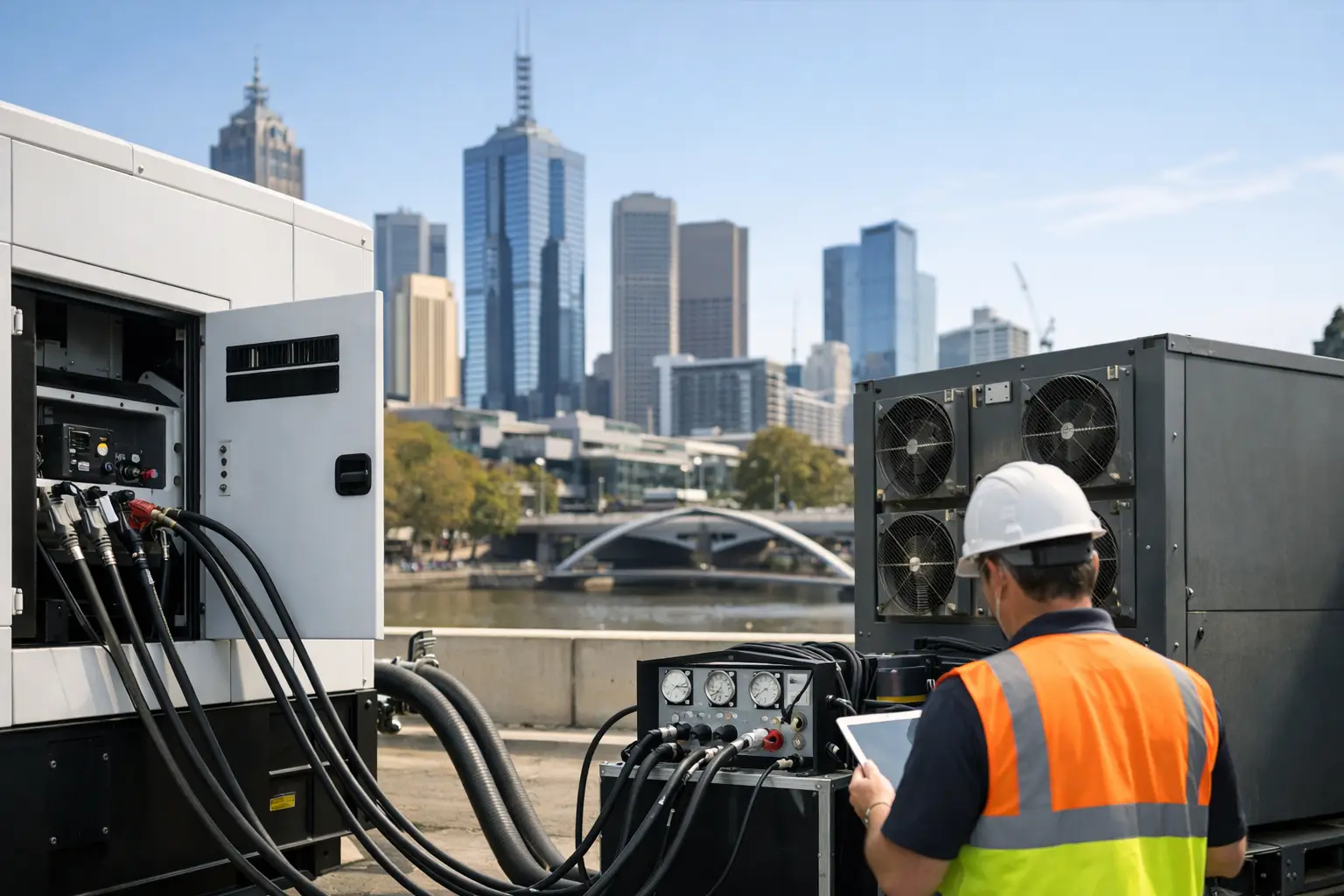
A standby generator can start perfectly during a monthly check and still fail when a real outage places it under demand. Batteries may be weak, fuel can be contaminated, cooling systems can be restricted, and the engine may not respond as expected once critical equipment is connected. Generator load testing is the practical way to find those issues before a blackout, rather than during one.
For Melbourne homes, businesses and industrial sites, the goal is straightforward: confirm that the generator, changeover equipment and connected electrical system can safely provide the power the site relies on. The right test method depends on the generator’s purpose, its size, how often it runs, and the consequences of an outage.
What generator load testing checks
A load test runs a generator at a planned electrical demand for a defined period while its performance is monitored. Instead of simply proving that the engine can start, it tests whether the unit can produce stable power and manage operating temperatures under meaningful load.
During testing, an electrician or generator technician may monitor voltage, frequency, current draw, oil pressure, coolant temperature, battery charging, exhaust condition and fuel supply. They will also observe how the automatic transfer switch or changeover arrangement responds where the generator is set up to supply a building during mains failure.
The test can reveal faults that no-load running will not expose. A generator may appear healthy while idling but suffer voltage drop, overheating, unstable frequency or excessive exhaust smoke when demand increases. These problems can affect sensitive controls, refrigeration, pumps, communications equipment, security systems and production machinery.
Load testing also helps reduce the risk of wet stacking in diesel generators. This occurs when an engine repeatedly runs too lightly loaded, allowing unburnt fuel and carbon deposits to build up in the exhaust system. It is not the only maintenance concern, but it is a common reason a generator that is regularly exercised may still need a properly planned test.
Load bank testing versus testing the building load
There are two main ways to apply load, and each has a place.
A load bank is purpose-built equipment connected to the generator to create a controlled electrical demand. It allows testing at set load levels without relying on the building’s normal equipment. This is particularly useful where a site cannot safely risk interrupting operations, where actual demand is too low, or where testing needs to reach a generator’s rated capacity.
Testing on the building’s own load checks more of the complete backup-power arrangement. It can confirm that the generator starts after a simulated supply failure, the transfer equipment operates correctly, and nominated circuits receive power. For a commercial site, this might include emergency lighting, essential HVAC controls, security, data equipment or refrigeration. For an industrial facility, it may include selected pumps, control panels or process-support equipment.
Neither approach is automatically better. A load bank provides control and can identify engine or alternator limitations. A building-load test verifies real-world switching and prioritised circuits. Many sites benefit from both at different times, particularly where generator failure would create a safety, compliance or operational risk.
Why a start test is not enough
Weekly or monthly generator run checks remain useful. They give operators a chance to identify obvious alarms, inspect for leaks, confirm battery condition and ensure the engine starts. However, a brief no-load run does not prove the generator will carry the site when mains power is unavailable.
Electrical load changes the conditions inside the generator. The alternator must deliver current, the engine governor must maintain speed, the cooling system must remove more heat, and the fuel system must sustain supply. At the same time, the transfer switch needs to operate as intended and the connected circuits must not exceed the generator’s available capacity.
The distinction matters most on sites with little tolerance for interruption. A medical practice may need critical equipment and lighting available. A retail business may be protecting refrigerated stock. A strata building may depend on fire services, access systems or pumps. A factory can face product loss and a difficult restart after an unplanned shutdown. In each case, testing is about proving a defined level of continuity, not merely hearing an engine run.
Planning a safe generator load test
Generator testing should begin with a clear understanding of what the generator is expected to power. This means reviewing the generator rating, essential-load schedule, switchboard arrangement, fuel capacity, previous service records and any site-specific safety requirements.
The team should then agree on the test window. A live transfer test may be unsuitable during trading hours, tenant peak periods or an active production run. Some facilities need advance notice for building occupants, security contractors, IT providers or lift technicians. Others may require a staged test so essential services remain protected while individual systems are checked.
Before the test, the generator and installation should be visually inspected. Fuel and coolant levels, battery terminals, belts, hoses, fluid leaks, exhaust components and control-panel alarms all deserve attention. A test should not be used to push an obviously unsafe or poorly maintained unit into operation.
Connection and isolation work must also be handled correctly. Temporary load banks, generator output connections and switchboard interfaces can involve significant fault energy. Qualified personnel should use an appropriate method of work, suitable test equipment and site controls. For permanently installed backup systems, the work must align with the installation design, manufacturer requirements and applicable Australian electrical and safety obligations.
Watching the right results
A useful test produces records, not just a verbal assurance that the generator ran. Record the applied load, duration, voltage and frequency stability, temperatures, fluid pressures, alarms, transfer performance and any defects identified. Photographs of visible faults and control-panel readings can also help build a clear maintenance history.
The results need interpretation. A generator that carries load but runs unusually hot is not necessarily ready for service. Similarly, a successful load bank test does not confirm that every building circuit is correctly selected on the essential-services board. Findings should lead to practical actions, such as battery replacement, fuel polishing, cooling-system servicing, load-shedding changes or further investigation of the changeover system.
How often should generators be load tested?
There is no single interval that suits every installation. The appropriate schedule depends on the generator’s use, equipment type, operating environment, maintenance history, manufacturer guidance, insurer requirements and the impact of failure.
A small residential standby generator used only for occasional outages will usually require a different program from a generator supporting a commercial kitchen, data room or industrial process. Sites in dusty, coastal, high-use or high-risk environments may need closer attention. A generator that has recently undergone repairs, fuel-system work or control upgrades may also warrant testing before it is relied upon.
Rather than treating testing as a once-off task, it is better to include it in a planned maintenance program. Regular inspections and exercise runs can catch simple deterioration. Periodic load tests can confirm performance under demand. Reviewing records over time makes trends easier to spot, such as declining battery performance, rising temperature readings or repeated transfer-switch faults.
Common issues found during testing
Testing often uncovers problems that are manageable when addressed early. Common examples include aged starting batteries, loose terminals, blocked filters, fuel contamination, coolant leaks, deteriorated hoses, controller alarms and transfer-switch settings that do not match the site’s current needs.
Load calculations can also expose a planning issue. Buildings change over time. A tenancy may add refrigeration, IT equipment or air conditioning, while a facility may alter machinery and control systems. If the essential load has increased beyond the generator’s practical capacity, the solution may involve revising the load schedule, introducing staged load shedding or assessing generator upgrades. Adding more load without checking capacity can turn backup power into a partial and unpredictable service.
For sites across Melbourne and Victoria, conditions outside the generator room matter too. Access for servicing, ventilation, flood exposure, noise constraints and fuel storage arrangements all affect long-term reliability. A generator is only as dependable as the system around it.
A practical approach for property and facility managers
Keep a current list of the circuits and equipment that must operate during an outage. Make sure it reflects current occupants and operations, not the original fit-out from years ago. Keep service reports, alarm records and test results together so faults can be tracked rather than repeatedly rediscovered.
When arranging generator load testing, provide the contractor with the generator model, capacity, location, service history and a description of the loads it supports. Flag any restrictions around shutdowns, access, noise, tenant notification or critical operating periods. This helps the work be planned safely and reduces disruption on the day.
A dependable generator is not proven by how it looks in the plant room. It is proven by measured performance when the site needs power most.