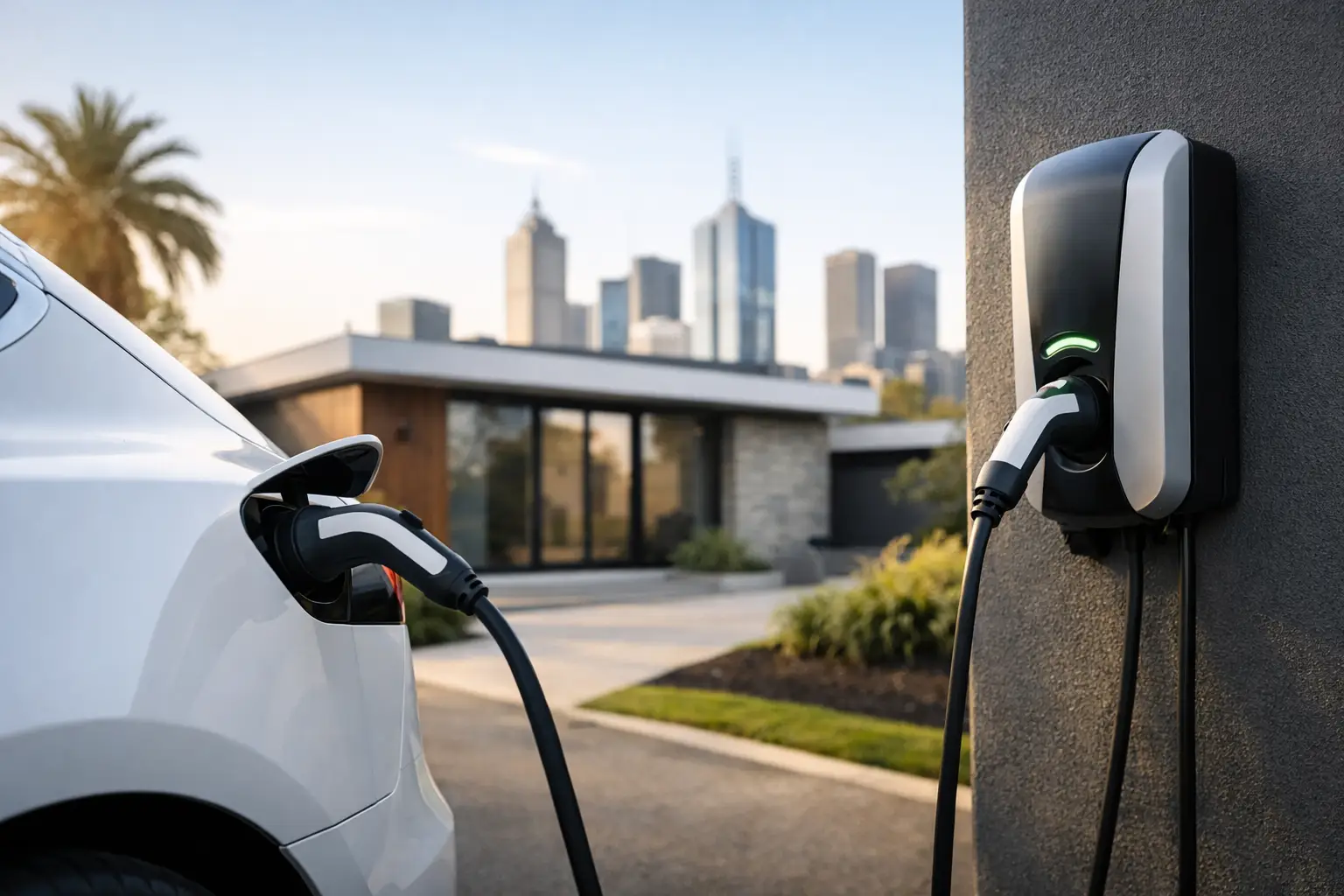
A public charger can be useful when you are out, but it is rarely the most convenient way to run an electric vehicle day to day. For most drivers, ev charger installation Melbourne properties is about having dependable charging where the vehicle already sits for hours: at home overnight, in a staff car park or at a depot between shifts.
The charger itself is only one part of the decision. Its location, the existing electrical supply, switchboard capacity, cable route and the way the property will be used all affect the scope of work. A well-planned installation gives the owner a practical charging setup without creating unnecessary pressure on the site’s electrical system.
Start with how the vehicle will be used
The right charging arrangement depends on the parking time available and the kilometres the vehicle typically travels. A homeowner who drives a moderate daily distance and parks in a garage overnight may be well served by a lower-output AC charger. A business operating vehicles across multiple shifts may need higher capacity, charging controls and a staged rollout rather than a single unit.
It is also worth checking the vehicle’s onboard charging capability. Installing a charger with a higher output than the vehicle can accept will not necessarily reduce charging time. Conversely, a charger that suits a current vehicle may not suit a future fleet or household vehicle. Planning for likely changes can avoid redoing cable runs, switchboard work or parking infrastructure later.
For residential properties, the practical question is often simple: can the vehicle recover its usual daily driving during the overnight parking window? For commercial sites, charging needs to be considered alongside operating hours, staff access, visitor parking and business-critical electrical loads.
EV charger installation Melbourne site checks
An on-site assessment should happen before a charger is selected or a final price is provided. The electrician needs to understand the condition and capacity of the existing installation, not just the distance from the switchboard to the parking bay.
The assessment will generally consider the main switchboard, available supply capacity, existing demand from appliances or machinery, the proposed charger rating and the route for new cabling. A detached garage, basement car park or rear loading area can involve longer cable runs, trenching, wall penetrations or protection against vehicle damage. These details can materially change the installation method and cost.
In older homes, the switchboard may require upgrades before a dedicated charging circuit can be added. In commercial and industrial environments, the issue may be overall maximum demand rather than the age of the board. A site can have a modern switchboard and still lack enough spare capacity to add several chargers at full output.
Dedicated circuits and protective devices
An EV charger should be installed on a dedicated circuit with the required protective devices and isolation arrangements. This is not a job for a standard power point, an extension lead or an improvised connection in the garage.
The electrical design needs to comply with applicable Australian standards, Victorian requirements and the equipment manufacturer’s instructions. Suitable protection is particularly important because electric vehicles can draw a significant load for extended periods. Correct installation protects people, property and the electrical system while supporting reliable operation.
Load management can make expansion practical
Load management monitors or controls charging output in response to the building’s electrical demand. When other loads rise, the charger can reduce its draw. When demand falls, it can make more capacity available for charging.
This can be useful in homes with electric cooking, heating, hot water, solar systems or multiple vehicles. It is especially valuable for workplaces and depots where adding chargers without managing demand could trigger expensive supply upgrades. Load management does not remove the need for proper design, but it can make a staged charging plan more achievable.
Choosing the charger and location
Most fixed charging installations use AC wall-mounted equipment. The best model is not automatically the one with the highest rating. Features such as scheduling, access control, usage reporting and load management may matter more than maximum output, particularly on a shared or business site.
At home, a charger positioned close to the usual parking location can reduce cable length and keep the installation tidy. The charging cable should reach the vehicle without crossing a walkway, driveway or area where it can be crushed, tripped over or exposed to unnecessary wear. Outdoor chargers need equipment and installation methods suited to the local conditions.
For a workplace, placement should account for who can use the charger and how vehicles move through the car park. A charger placed in a visitor bay may be convenient, but it can create access problems if staff need regular charging. In a depot, bay layout, traffic flow, bollards and cable protection may be as important as the electrical work itself.
Commercial operators should also decide early whether charging will be free, restricted to authorised users or billed by use. That decision can affect the charger’s communications and access-control requirements. It is easier to choose suitable equipment at the outset than to retrofit a payment or user-management system later.
Homes, apartments and shared parking
A standalone home usually has a clearer approval path because the owner controls the switchboard, garage and parking area. Even then, solar generation, battery storage and future electrical upgrades should be considered as part of the broader household plan.
Apartments and townhouses with shared parking need more coordination. The owner may need approval from the owners corporation, and common property rules may apply to cable routes, metering, wall penetrations and parking spaces. The building’s central supply capacity also needs assessment, particularly where several residents may request chargers over time.
A one-off apartment installation can create a poor outcome if it uses the only practical cable pathway or consumes capacity needed for future users. A building-wide strategy can set out approved charger locations, metering arrangements, load management and the process for future applications. It requires more planning initially, but it is often the more orderly option.
Commercial and industrial charging needs a staged plan
For businesses, EV charging is often an operational project rather than a simple electrical add-on. A contractor may need to coordinate with building management, site safety requirements, vehicle schedules and other trades. Work may also need to be completed outside operating hours to minimise disruption.
A staged approach is commonly sensible. The first stage can install a limited number of chargers while allowing for future cable pathways, distribution equipment and spare capacity. This avoids paying for a full rollout before demand exists, without boxing the business into a costly redesign when more vehicles are added.
Fleet charging requires closer attention to timing. If every vehicle returns at 5 pm and begins charging at maximum output, the combined demand can be substantial. Smart charging schedules can spread loads through the night, prioritise vehicles needed first and reduce pressure during peak building demand. The most suitable approach depends on fleet size, shift patterns and the available electrical supply.
What affects installation cost?
The charger unit is only one component of the overall cost. Straightforward installations are generally more economical where the parking point is close to a suitably rated switchboard and a clear cable route is available. Costs can increase where there is a long run to a detached structure, underground cabling, switchboard upgrades, concrete drilling, trenching, supply upgrades or work in a multi-level car park.
Commercial projects can also involve design documentation, access coordination, traffic management, protective bollards, signage and communications setup. These are not unnecessary extras. They address how the charger will function safely and reliably in a working environment.
A clear scope should identify what is included, the proposed charger capacity, any assumptions about the existing electrical system and the conditions that may require additional work. This gives property owners and managers a better basis for comparing quotations than a low headline figure with limited detail.
Prepare for a cleaner installation
Before the electrician attends, confirm where the vehicle normally parks and clear access to the switchboard, garage or relevant parking area. If the charger will be installed at a business or apartment building, arrange access with building management and identify any approval requirements early.
It also helps to have the vehicle make and model available, along with details of solar, batteries, major electric appliances or planned site upgrades. For commercial sites, provide expected vehicle numbers, charging windows and any future expansion plans. Better information at the assessment stage leads to a more accurate design.
The best charging setup is the one that fits the property, the vehicle and the way people actually work or live. Whether it is a single home charger or a staged fleet project, iElectrify can help assess the electrical requirements and plan work that supports safe, practical charging for the years ahead.