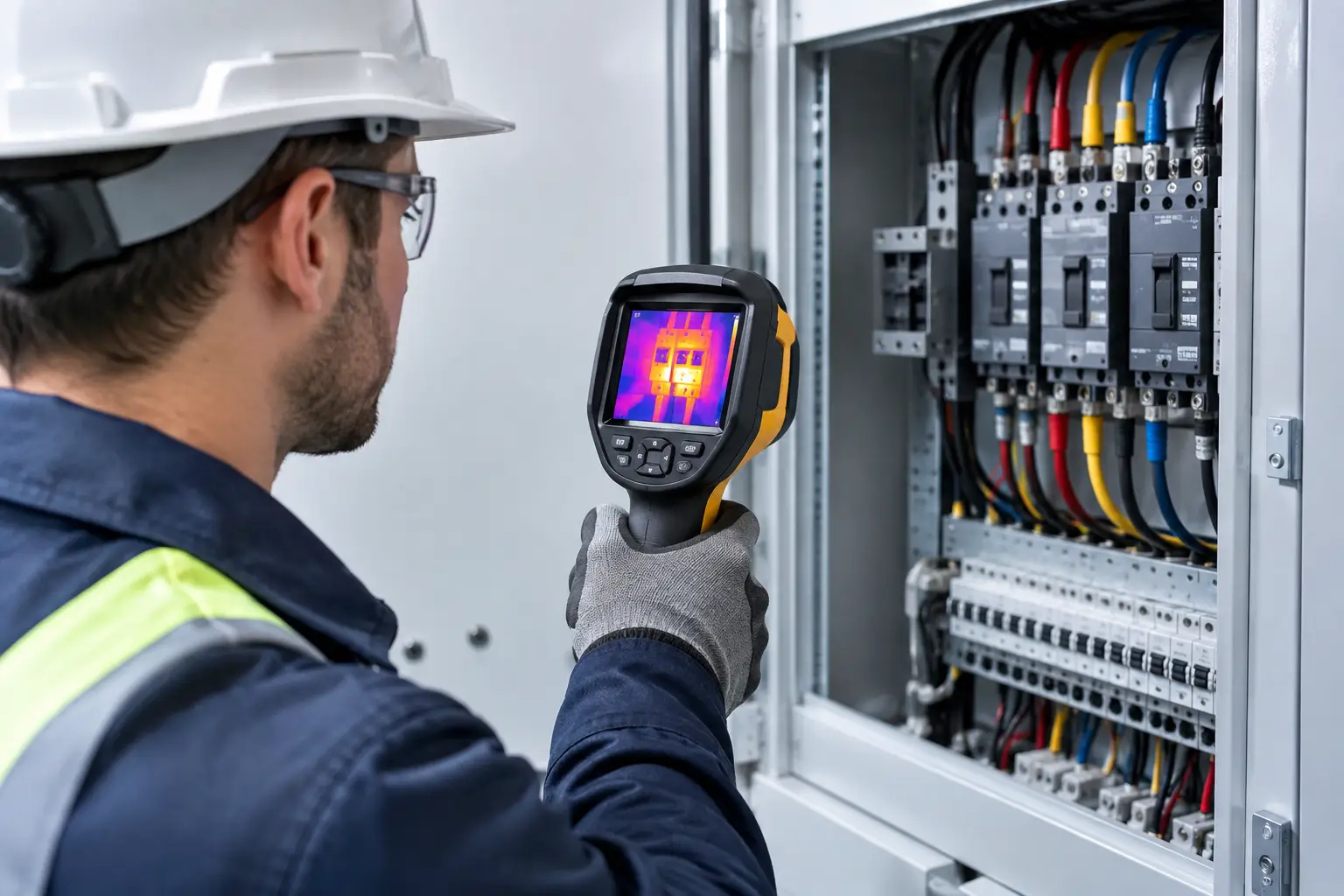
A switchboard can look clean, sound normal and continue supplying power while a connection inside is running hotter than it should. Electrical thermal imaging gives qualified electricians a way to identify these heat patterns before they become a failure, outage or fire risk. For Melbourne property owners, facility managers and site operators, it is a practical maintenance tool that helps direct attention to the circuits and components that need it most.
A thermal inspection is not a substitute for electrical testing, repairs or compliance work. It is a non-invasive method of gathering useful information about equipment operating under load. Used properly, it can reduce guesswork and help plan maintenance with less disruption.
What electrical thermal imaging can identify
Electrical equipment produces heat during normal operation. The purpose of thermal imaging is not to find every warm component, but to identify temperatures that are unusual for the component, its load or comparable equipment nearby.
An electrician uses a thermal camera to view infrared energy and display it as a colour image. Cooler areas generally appear darker, while warmer areas are shown in brighter colours. The image provides a starting point for investigation, not a diagnosis by itself.
Common findings include loose or deteriorating connections, overloaded circuits, unbalanced phases, failing breakers, worn contactors, damaged fuse connections and high-resistance joints. These issues can create localised heat well before there is visible damage, tripping or a complete loss of supply.
On a commercial site, a warm cable termination in a distribution board may point to a connection that requires attention during planned maintenance. In an industrial setting, an abnormal temperature pattern around a motor control centre can help maintenance teams prioritise a shutdown. At a home, scanning may reveal a concerning hot spot at the main switchboard or solar-related equipment that warrants further testing.
Why heat matters in electrical systems
Heat is often the result of electrical resistance. A connection can become loose through vibration, thermal expansion and contraction, corrosion, poor installation or repeated load changes. As resistance increases, so can heat. Left unaddressed, that heat can damage insulation, terminals and protective devices.
Overload is another common cause. A circuit that has gradually picked up more equipment may operate close to, or beyond, its intended capacity. Thermal scanning can show whether a cable, breaker or termination is noticeably hotter than comparable components. The cause may be load-related, but it could also be a poor connection, incorrect component selection or a fault elsewhere in the circuit.
This distinction matters. Replacing a hot breaker without finding out why it is hot can leave the underlying issue in place. A professional inspection should consider the thermal image alongside loading, circuit design, the condition of the equipment and, where required, electrical test results.
Where thermal imaging delivers the most value
Thermal imaging is especially useful where electrical failure would interrupt operations, create safety concerns or lead to expensive reactive work. The best timing depends on the site and how equipment is used.
For businesses, useful targets often include main switchboards, distribution boards, tenancy boards, plant rooms, HVAC isolators, kitchen equipment, server-room supply equipment and three-phase machinery. A scan undertaken while the site is carrying a representative load is generally more informative than one completed during a quiet period.
Industrial facilities may apply thermal imaging to motor control centres, control panels, transformers, switchgear, process equipment and larger cable terminations. On these sites, thermal inspections work well as part of a broader preventative maintenance program. Trends between inspections can be more valuable than a single image, particularly for equipment that supports production.
For homeowners, an inspection can be worth considering after a major renovation, new high-load appliances, air conditioning installation, solar and battery work, repeated tripping, unexplained warm switchboard components or signs of electrical deterioration. It is also useful for landlords and property managers who are planning maintenance across multiple properties.
Not every property needs thermal imaging on a fixed schedule. A small home with a modern, lightly loaded switchboard has different risk factors from a warehouse operating machinery across long shifts. Age of equipment, electrical demand, maintenance history, business continuity requirements and observed issues should guide the decision.
What a professional thermal inspection involves
A useful inspection begins before the camera is switched on. The electrician needs to understand the equipment being examined, the normal operating conditions and any concerns reported by the client. Information such as recent nuisance tripping, equipment changes, production loads or previous faults can provide valuable context.
The inspection is then performed with appropriate safety controls. Switchboards and live electrical equipment can present serious hazards. Covers should only be removed where it is safe, necessary and permitted, and the work should be completed by a suitably qualified electrician. Thermal cameras allow viewing without physical contact, but they do not remove the risks associated with exposed live parts.
During the scan, the electrician compares similar components and records areas of concern. They may check phase loading, inspect connections, take visible-light reference images and complete further tests. A thermal hot spot should be assessed in context. A component at a higher temperature may be operating normally because it is carrying a higher load, while a smaller temperature difference between identical components can be more significant.
The findings should be documented clearly. A practical report identifies the equipment inspected, images of notable findings, the location of each issue, its relative priority and recommended next steps. This gives property owners and maintenance teams a usable basis for repairs, budgeting and future inspections.
Limits of thermal imaging to keep in mind
Thermal imaging is valuable, but it has limitations. A camera reads surface temperature, not the internal condition of every component. A fault may not be visible if the equipment is not carrying enough load at the time of inspection. Intermittent faults can also be difficult to capture.
Reflective surfaces can produce misleading readings by reflecting nearby heat sources. Materials have different emissivity, meaning they emit infrared energy differently. Distance, viewing angle, airflow, sunlight and ambient temperature can all influence what the camera shows. This is why experience and sound electrical judgement are as important as the image itself.
It also cannot confirm that an installation complies with current requirements. Compliance assessment, testing and electrical certification have their own processes. Thermal imaging supports a maintenance strategy, but it does not replace insulation resistance testing, earth continuity testing, RCD testing or a visual inspection where those tasks are required.
Turning findings into practical maintenance
A thermal report is most useful when the response is proportionate to the risk. A severe hot connection may require urgent isolation and repair. A moderate temperature variation might be monitored, tested and rectified during the next planned shutdown. An observation with no immediate fault indication may simply establish a baseline for comparison later.
For commercial and industrial operators, it helps to keep thermal images and repair records together. If the same board is inspected under similar load conditions over time, a developing issue is easier to identify. It also provides maintenance managers with evidence for prioritising work before a minor defect becomes an unplanned outage.
After repairs, a follow-up scan under normal load can confirm whether the abnormal heat pattern has been resolved. This is particularly useful after tightening or replacing terminations, redistributing loads, replacing contactors or repairing damaged components.
iElectrify can incorporate thermal inspections into electrical maintenance planning for residential, commercial and industrial sites across Melbourne and Victoria. The right scope starts with the equipment, the operating conditions and the consequences of failure, rather than applying the same inspection to every property.
If a board is tripping regularly, a connection has discoloured, equipment is running unusually warm or downtime would cause a significant problem, arrange an assessment before the next fault chooses the timing for you.