When the mains supply drops out, a generator is only useful if it can power the loads that matter without creating a second electrical hazard. This backup generator connection guide explains how Melbourne property owners, businesses and facility managers can plan a compliant connection that protects people, equipment and the electricity network.
A generator should never be treated as an appliance that can simply be plugged into a building. The connection method, changeover equipment, generator capacity and operating procedures all need to suit the site. For homes, that may mean keeping refrigeration, lighting, internet and a few selected circuits running. For a commercial or industrial site, it may mean maintaining security, safety systems, critical plant or essential IT equipment while managing much higher loads.
Why a generator needs a proper connection
The key issue is preventing generator power from feeding back into the electricity network. This is often called backfeeding. It can expose line workers to dangerous voltage, damage the generator or installation, and create serious fire and shock risks when utility power returns.
A compliant installation uses a changeover arrangement that separates the building from the grid before generator power is connected. Depending on the property and generator type, this may be a manual changeover switch, an automatic transfer switch or a more specialised switchboard arrangement. It gives the site a clear choice: normal supply or generator supply, never both at once.
This is not a suitable DIY job. In Victoria, fixed electrical installation work must be completed by a licensed electrician, with the required certification and testing. A professional assessment also identifies issues that are easy to miss, including earthing requirements, neutral switching, fault protection, cable capacity and the location of the generator inlet.
Start by defining what must stay on
Generator size should follow the essential load, not the total size of the property. Trying to run every circuit usually results in an oversized, costly system that consumes more fuel and may still perform poorly under changing loads.
For a house, an essential-loads board might include selected lights, the fridge, garage door, a few power points, communications equipment and perhaps a small pump. High-demand appliances such as ducted air conditioning, electric hot-water systems, ovens and large pool equipment are commonly excluded unless there is a specific reason to retain them.
Commercial sites need a more detailed load review. Consider which services are genuinely business-critical and which can remain off during an outage. A medical practice may prioritise refrigeration, emergency lighting, communications and selected treatment equipment. A warehouse may focus on security, network equipment, loading systems and a limited office area. Industrial facilities may need controlled shutdown, process controls, pumps or safety systems, but not necessarily every motor and production line.
Motor starting current matters as much as normal running load. Pumps, compressors, refrigeration equipment and some air conditioning systems can draw a high surge when starting. A generator that appears large enough on paper may trip or suffer voltage drop if several motors start together. Load sequencing, soft starters or a larger generator may be required.
Choosing the right generator arrangement
A portable generator can be a practical option for short, occasional outages where a defined group of circuits is needed. It is generally connected to a dedicated generator inlet by a suitable lead after the generator has been positioned outdoors. The inlet is then connected through the installed changeover equipment.
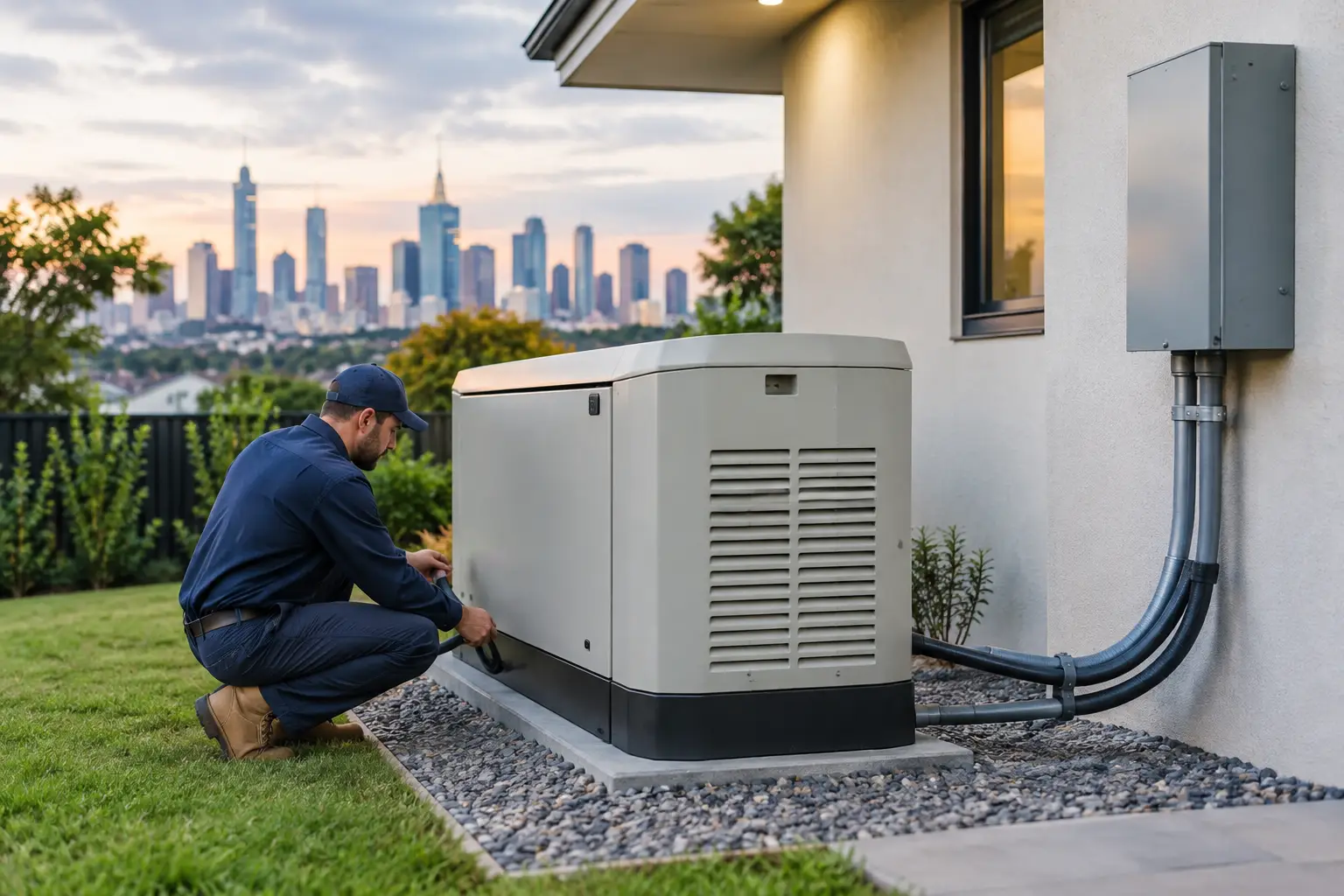
A permanently installed standby generator suits sites where outages create greater operational or safety consequences. It can be configured to start automatically after a supply failure and transfer selected loads without someone attending the switchboard. This approach costs more upfront, but can be appropriate for businesses, remote facilities, high-value stock or properties where occupants may not be able to safely operate a portable unit.
Battery storage is another consideration. It can provide quiet, immediate backup for selected circuits and may bridge the gap before a generator starts. However, its capacity and output limits need to be assessed against actual loads. In some sites, a battery, solar system and generator can work together, but their controls and grid-connection settings must be designed as one system rather than added independently.
The backup generator connection guide: key design decisions
The practical design begins at the switchboard. An electrician will review the existing supply, main switchboard condition, available space and circuits to be backed up. Older boards may need upgrades before a changeover switch and essential-loads section can be installed neatly and safely.
The generator inlet should be located where it can be reached without running leads through doors, windows or walkways. It should be protected from weather and physical damage, while still allowing the generator to operate outdoors with adequate ventilation. Generators produce carbon monoxide, so they must not run in a garage, under an enclosed patio, near open windows or beside air-conditioning intakes.
Cable selection is based on generator output, run length, installation conditions and prospective fault performance. The electrician will also determine how the neutral and earth are managed when on generator supply. This detail varies with the generator and the installation arrangement, which is why copying a connection diagram from another property is not a safe approach.
For three-phase sites, the assessment also considers phase balance. A generator may be rated for three-phase output but perform poorly if most essential loads sit on one phase. Some equipment also requires stable frequency and voltage quality, especially electronic controls, servers, variable-speed drives and sensitive medical or laboratory equipment.
Installation, testing and documentation
A proper installation does more than fit a switch. The electrician should label the supply positions clearly, test the operation of the changeover system and confirm that protective devices operate correctly in generator mode. Staff or occupants should know where the equipment is, what circuits are backed up and what must be turned off before starting the generator.
For an automatic system, testing should include start-up, transfer, loading, return to mains supply and cool-down operation. For a manual system, the procedure should be simple enough to follow under pressure. Clear labels and a short site-specific instruction sheet are more useful than relying on memory during a storm or overnight outage.
Keep documentation for the generator, switchboard modifications, electrical certificates and maintenance history together. Facility managers should also record fuel type, expected run time, refuelling arrangements and the contact details for the service provider. These details become critical when an outage lasts longer than expected.
Safe operation during an outage
Before starting a portable generator, move it into an open outdoor area on stable ground and check fuel, oil and visible condition. Keep it dry and use only the correctly rated connection lead supplied or specified for the installation. Do not use household extension leads as a substitute for a fixed generator inlet and changeover system.
Once the generator is running, add load gradually where the system allows it. Avoid switching on large appliances without checking that they are part of the intended backup load. Watch for overload alarms, unstable operation, unusual smells or tripped breakers. If there is any doubt, reduce load and contact a licensed electrician rather than repeatedly resetting equipment.
Refuelling requires particular care. Shut the generator down, allow it to cool and keep fuel away from ignition sources. Store fuel in approved containers and consider its shelf life, especially for equipment that may sit unused for months.
Maintenance is part of reliability
A backup generator that has not been tested is not a backup plan. Portable units should be run periodically in line with the manufacturer’s recommendations, with fuel condition, battery, oil and starting performance checked. Standby systems benefit from scheduled testing under load, not just an unloaded start test.
The electrical installation also deserves periodic review, particularly after switchboard changes, renovations, added machinery or changes to tenancy. A backup system designed for a modest office load may no longer be suitable after additional refrigeration, server equipment or plant is installed.
For Melbourne homes, commercial premises and industrial facilities, iElectrify can assess the practical requirements of a generator connection, from essential-circuit planning through to compliant switchboard work and testing. The right setup is the one that keeps essential services available without making an outage more dangerous or more difficult to manage.