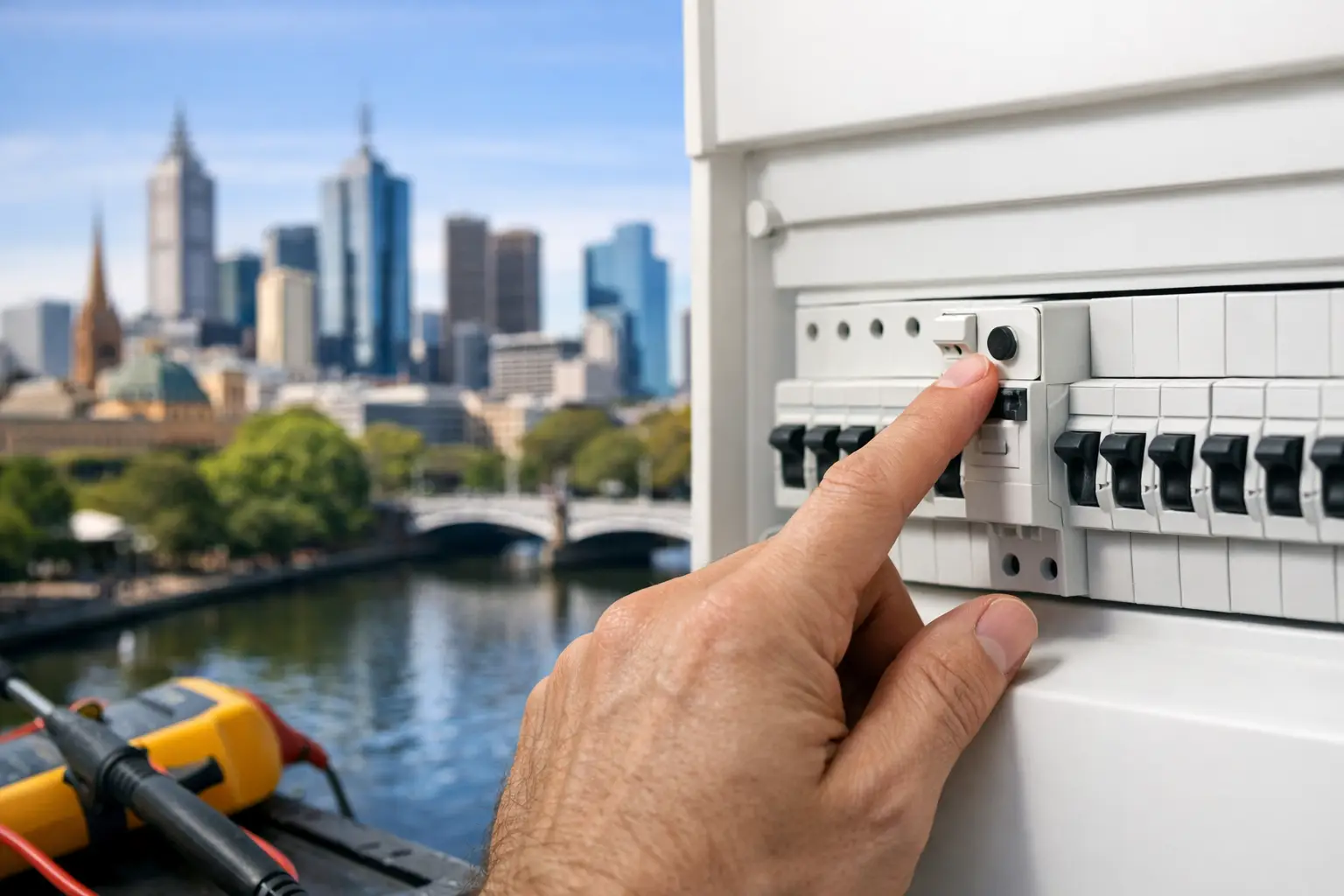
A safety switch can look like a small component in a switchboard, but it has a serious job. It monitors the flow of electricity and disconnects power quickly if it detects current leaking to earth - the type of fault that can occur when someone contacts a damaged appliance, cable or electrical fitting. So, are RCDs mandatory in Victoria? In many circumstances, yes. The exact requirement depends on the property type, the age and condition of the installation, and whether electrical work is being carried out.
RCD stands for residual current device. It is commonly called a safety switch. It is different from a circuit breaker or fuse, which primarily protects wiring and equipment against overloads and short circuits. A modern switchboard may contain RCBOs, which combine circuit-breaker and RCD protection in one device.
When are RCDs mandatory in Victoria?
RCD requirements in Victoria are driven by electrical safety legislation, rental minimum standards and the current Wiring Rules, AS/NZS 3000. These requirements are particularly relevant when a new installation is completed, when an existing installation is altered or extended, and when a property is being prepared for lease.
For new domestic electrical installations, RCD protection is generally required for final subcircuits. This includes circuits supplying socket outlets and, under current requirements, lighting circuits. The same principle applies when substantial electrical work is undertaken in an existing home. A licensed electrician must assess the scope of work and ensure the affected installation complies with the applicable rules.
The requirement is not always a blanket instruction to replace every older switchboard immediately. An owner-occupied property with an older, untouched installation may not be required to be upgraded solely because standards have changed. However, the absence of safety switches should be treated as a safety issue worth addressing, particularly where children, outdoor equipment, older wiring or high-use appliances are involved.
New work and alterations can trigger an upgrade
Electrical standards are not static. A switchboard that was compliant when installed may not meet the requirements that apply to a renovation, extension or new circuit today.
If you are adding power points, upgrading a kitchen, installing air conditioning, renovating a bathroom, building an extension or replacing parts of a switchboard, the new work needs to comply with the current standard. Depending on the work, this may mean installing RCDs or RCBOs to protect the new or altered circuits. It may also reveal that the existing switchboard has limited capacity, degraded components or unsuitable protection arrangements.
This is where a site-specific assessment matters. The outcome can vary between a small circuit alteration and a full renovation. A licensed electrician can identify what must be upgraded for compliance, what is recommended for safety, and whether a switchboard replacement is the practical long-term option.
RCD requirements for Victorian rental properties
Rental properties have additional obligations. Victorian rental minimum standards require rental providers to ensure the property has a compliant electrical safety switch, where required, and to arrange electrical safety checks at the required intervals. These obligations are separate from the general expectation that any new electrical work is compliant.
For landlords, this means safety switches should not be treated as a once-only item checked at the start of a tenancy. The switchboard, fixed wiring and electrical fittings need ongoing attention. A test button that does not operate, a tripping circuit, exposed wiring or a damaged switchboard cover should be investigated promptly by a licensed electrician.
Property managers should also keep clear records of electrical safety checks, repairs and compliance work. It supports tenancy obligations and gives the owner a practical maintenance history for the property.
What about commercial and industrial sites?
RCD obligations also apply in commercial and industrial environments, but the answer is more dependent on the circuit, equipment and work area. Socket outlets used by staff, cleaners, contractors or visitors commonly require RCD protection. Temporary supplies, portable equipment, wet areas, outdoor work and construction activities can present higher electric-shock risks and demand closer control.
However, not every circuit in a factory, warehouse or commercial tenancy can be treated exactly like a household power circuit. Some fixed equipment may need carefully designed protection to avoid unnecessary shutdowns, while still meeting electrical safety requirements. Refrigeration, production machinery, critical IT equipment and building services can all need a considered approach.
The right response is not to remove RCD protection because a circuit trips. Repeated tripping can indicate moisture, insulation breakdown, a faulty appliance, incorrect circuit loading or a neutral fault. An electrician should locate the cause and determine whether the circuit design and protective devices are suitable for the equipment being used.
RCDs are not optional safety extras
Safety switches are sometimes confused with surge protectors, circuit breakers or smoke alarms. Each has a different purpose. Surge protection helps limit damage from voltage spikes. Circuit breakers protect cables from excessive current. Smoke alarms provide early warning of fire. An RCD is designed to reduce the risk of serious electric shock from an earth-leakage fault.
An RCD cannot make unsafe electrical work safe. It does not repair damaged cords, prevent every electrical incident or replace correct earthing. It is an additional layer of protection, not a substitute for proper installation and maintenance.
That distinction matters in older Melbourne homes, where original wiring, ageing switchboards and added loads can coexist. A home may have a safety switch fitted but still need attention to earthing, circuit capacity, loose outlets or deteriorated cabling.
Testing safety switches
RCDs need testing because mechanical and electronic components can fail over time. Most units have a marked test button, usually labelled “T” or “Test”. Pressing it should immediately switch the protected circuit off. Reset the device afterwards by moving the lever fully to the off position and then back on if necessary.
As a general household check, test buttons are commonly operated every three months. If the device does not trip, will not reset or trips repeatedly, arrange a licensed electrician. Do not keep forcing it back on, bypass it or replace it yourself.
For workplaces, testing and inspection arrangements should reflect the site’s risk profile, the equipment in use and applicable workplace safety obligations. Portable appliances used in construction, manufacturing, hospitality and other demanding settings may require a more formal testing regime than ordinary office equipment.
Signs your switchboard needs attention
A switchboard upgrade is not automatically required because a board looks old. But certain signs justify an inspection. These include ceramic fuses, no visible safety switches, frequent tripping, buzzing or heat around the board, discoloured components, damaged covers, limited space for new circuits, or a board located where water can enter.
You should also arrange an assessment before major electrical additions. Induction cooktops, electric vehicle chargers, solar systems, battery storage, larger air conditioners and new machinery can materially change the load and protection needs of an installation.
The most cost-effective time to address switchboard issues is often before renovation walls are closed, new equipment is commissioned or a tenancy begins. It reduces disruption and allows the electrical system to be designed around the way the property will actually be used.
A practical approach for property owners and operators
If you are unsure whether RCDs are mandatory for your property, start with the switchboard and the proposed work. Identify whether safety switches are present, which circuits they protect, and whether any recent changes have been made to the electrical installation. Then have a licensed electrician inspect the setup against the current requirements that apply to the site.
For a rental, include RCD operation and electrical safety checks in your ongoing compliance process. For a business or industrial facility, consider the risk posed by portable equipment, wet areas, contractors and critical circuits rather than relying on a one-size-fits-all arrangement.
A properly selected and tested RCD is one of the simplest safeguards in an electrical installation. If your switchboard is older, your property is being altered, or a safety switch is not behaving as it should, arranging a professional assessment is a sensible next step.